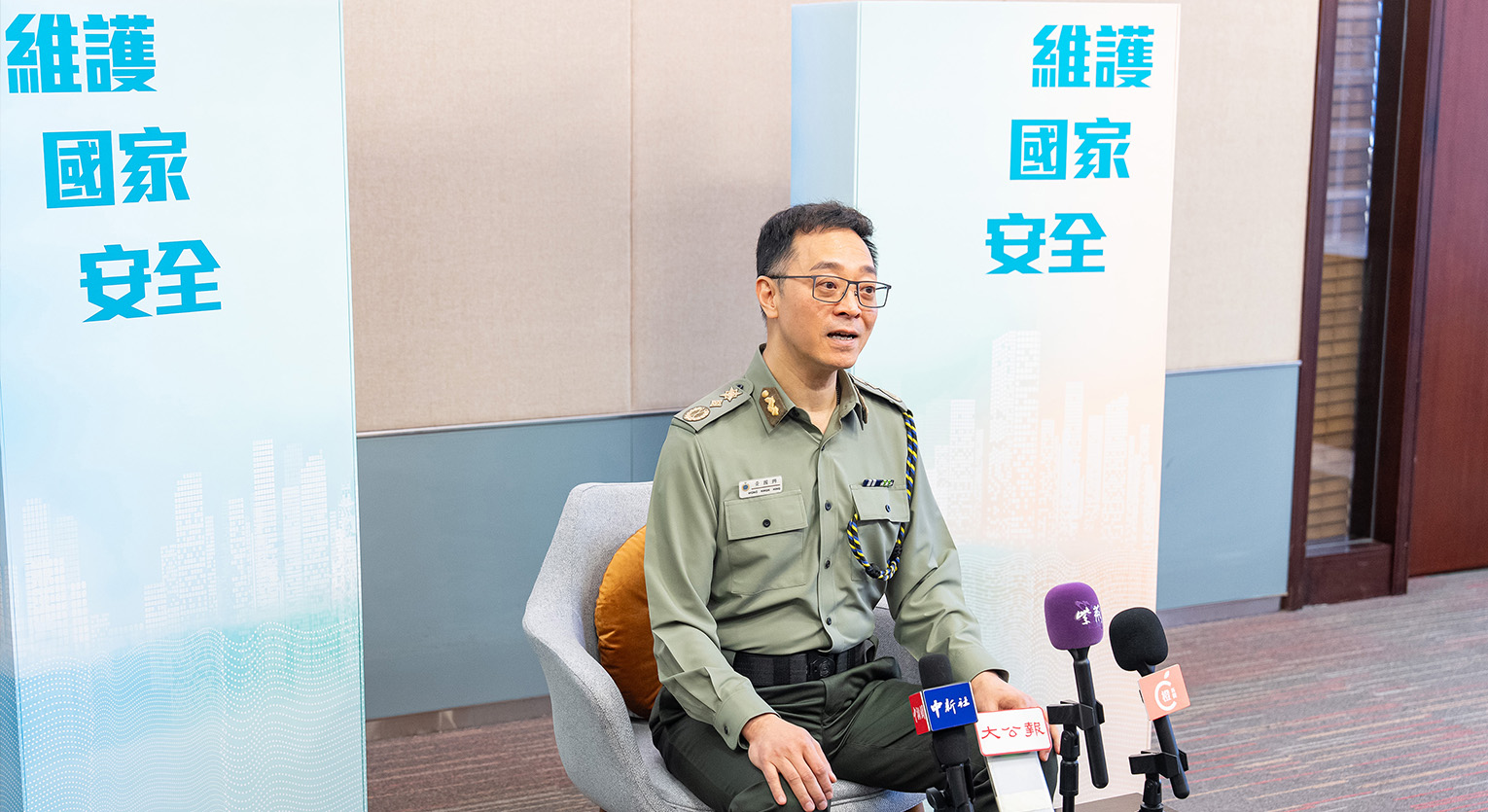
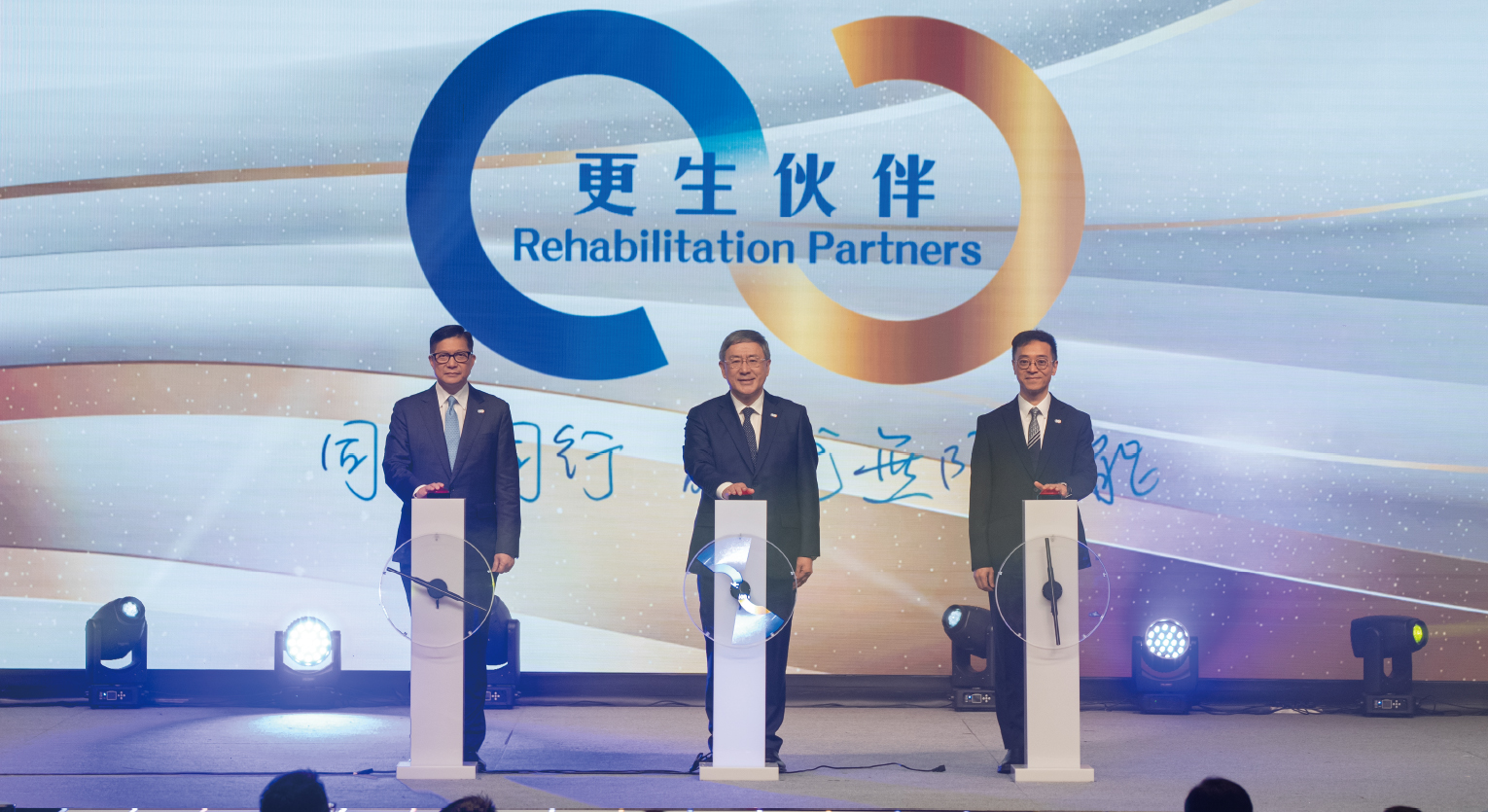
The Commissioner of Correctional Services, Mr Wong Kwok-hing, led all directorate officers to review the work of the Correctional Services Department (CSD) over the past year and look ahead to the future at the annual press conference held in Stanley Prison on February 23.
Penal Population: Changes and Challenges
Last year, the number of admissions to correctional institutions increased by 3% to 18990 as compared with 2024. Besides, the average daily penal population at correctional institutions also increased significantly by 8% to 10315 persons last year as compared with 2024. The average daily occupancy rate also rose to 92%. The average daily number of remands last year rose significantly by 16% to 4217 persons as compared with 2024, reaching a new record high since 2000. The average daily number of detainees last year increased by 6% to 338 as compared with 2024.
In response to the ever-changing penal population, the CSD has deployed part of the capacity of individual correctional institutions to admit remands. Moreover, the Department has already commenced the in-situ partial redevelopment of Lai Chi Kok Reception Centre, which will increase its capacity for admitting adult male remands in the long run.
Refining and strictly enforcing laws
Last year, the CSD worked in full alignment with the Government to amend the Prison Rules, with a view to strengthening the overall law enforcement effectiveness of the Department, incorporating elements of safeguarding national security into the legislation. Upholding the spirit of "adhering to the law", institutional staff continued to strictly enforce the law to maintain the good order and discipline of the institutions. With regard to intercepting the smuggling of dangerous drugs into institutions, the Department last year incorporated the emerging drug etomidate into the Narcotics and Explosives Detection and Identification System, thereby enhancing the efficacy of intercepting the smuggling of dangerous drugs into correctional institutions and strengthening the deterrent effect.There were only 5 seizure cases of suspected dangerous drugs last year, similar to the 6 cases in 2024. In addition, the Department conducted a total of 12688 search operations in correctional institutions last year, and the Regional Response Team carried out 5 operations to support the security work of correctional institutions.
Enhancing response capabilities through strengthening exchanges and collaboration
Dedicated efforts were made by the CSD to foster regional exchanges and collaboration. Last year, the Department organised the first Greater Bay Area Correctional Services Tactical Skills Competition, inviting 7 teams from correctional counterparts in the Guangdong-Hong Kong-Macao Greater Bay Area (GBA) to participate, enhancing their tactical skills and emergency response capabilities. The event also enhanced exchanges and collaboration in correctional services in the GBA. Besides, in January this year, the CSD further established the Hong Kong International Correctional Services Response Tactics Training Academy to provide professional and systematic tactics training for staff of correctional institutions and law enforcement agencies from different places, thereby enhancing each other's professionalism and capabilities in handling emergencies.
Continuously carrying out facilities improvement works to cope with extreme weather
To cope with very hot weather, the Department replaced and installed different types of fans in various correctional institutions, bringing the total number of fans in all correctional institutions to over 17500 last year. Moreover, new types of grille gates and windows with better ventilation have been installed in correctional institutions, and innovative technologies such as solar control films and cooling coatings have been introduced to lower the indoor temperature.
Extending telemedicine consultations to enhance medical benefits
Furthermore, the CSD proactively extended the coverage of telemedicine consultation services. Last year, the psychiatric telemedicine consultation service covered 16 public hospitals and clinics, whereas the medicine telemedicine consultation service covered 7 public hospitals. 1134 telemedicine consultations were arranged for persons in custody (PICs) last year, an increase of 63.6% as compared with 2024. Moreover, the CSD installed the Hospital Authority’s Clinical Management System in different correctional institutions, thereby strengthening the clinical operation of visiting specialists in correctional institutions and further enhancing the medical and healthcare services for PICs.
Applying innovation and technology to optimise management operations
The CSD continued to enhance the application of innovation and technology. For example, the Passage Surveillance System 2.0 was launched in Lo Wu Correctional Institution and the Smart Health Sensing System 2.0 was installed in institution hospitals. Moreover, a Technology Showcase was held jointly with the Hong Kong Science and Technology Parks Corporation in the Penal Lab set up at the former Cape Collinson Correctional Institution last year. It showcased innovation and technology projects in various areas. Among these proposed projects, the four most suitable ones with the greatest potential were selected for site trials in correctional institutions.
In addition, the Department fully launched the Video Visit e-Booking Service last year. Visitors can make online bookings for video visits at one of the Multi-purpose Family and Rehabilitation Service Centres in different districts, or at the Lai Chi Kok Video Visit Centre. The service provides visitors with more convenient and people-oriented visiting arrangements.
The CSD enhanced its rehabilitation work on all fronts last year, with a view to assisting PICs to turn over a new leaf and become contributing members of society upon reintegration into daily life outside the prison.
Promoting Chinese culture and enhancing national identity
The CSD continuously addresses the special rehabilitation needs of PICs involved in the black-clad violence and contravening the Hong Kong National Security Law/Safeguarding National Security Ordinance by launching a number of rehabilitation programmes under the Project PATH to help them gain a comprehensive understanding of Chinese traditional culture and enhance their sense of national identity. These programmes were extended to cover other PICs to enhance their knowledge of Chinese traditional culture, foster good character and moral education. For example, the Department held talks on the rule of law and safeguarding national security law in Hong Kong and organised patriotic film screenings and essay competitions for PICs.
In addition, the Department arranged for young supervisees to visit thematic exhibitions at the Patriotic Education Centre and invited them to participate in volunteer services that allowed them to experience Chinese culture and ethics, enabling them to give back to society while fostering good character and moral ethics.
Developing diversified rehabilitation programmes through enhancing research capability
The Department has been striving to expand and enhance its capability in evidence-based research in collaboration with external organisations, in order to develop diversified rehabilitation programmes and psychological correction methods. Last year, the CSD held the Desistance from Crime: Correctional Research and Practice Professional Seminar to disseminate the findings of a study on desistance from crime jointly conducted with the Chinese University of Hong Kong, which identified factors crucial in helping rehabilitated persons start anew.
Since last year, the Rehabilitation Dog Services have been further extended to a number of male institutions in order to help male PICs alleviate their negative emotions and promote their psychological well-being. The Department has also implemented the Rehabilitation Dog Services Internship Programme at Phoenix House, enabling halfway house trainees to develop a sense of responsibility through taking care of rehabilitation dogs. Besides, the trainees have been arranged to take the rehabilitation dogs to visit the elderly to give back to society. The statistical figures and research findings on the effectiveness of the animal-assisted therapy for PICs will be compiled and released in the future, and the Department also plans to extend the services to other groups of offenders.
The Department launched the Jockey Club Project ReBond last year, which is a three-year collaborative initiative to provide one-stop rehabilitation services for PICs serving sentences of less than one year, covering both their incarceration and post-release periods to reduce recidivism among rehabilitated persons. The Department will collaborate with the University of Hong Kong to conduct a three-year study to track the rehabilitation situation of service users after their release, with a view to optimising the rehabilitation and crime prevention work.
With the 15th National Games jointly organised by Guangdong, Hong Kong and Macao last year, the CSD invited a number of Hong Kong elite athletes to take part in rehabilitation activities with PICs. With ample energy and positive power, the athletes helped PICs and rehabilitated persons grow and transform, and appealed to the public to support rehabilitation work.
The CSD renamed its Rehabilitation Pioneer Project, and its youth uniformed group Rehabilitation Pioneer Leaders to the Correctional Services Pioneer Project (CSPP) and Correctional Services Pioneer Leaders (CSPL) respectively last year in order to fully reflect the CSD's relationship with these community education initiatives and their unique professional characteristics.
Adopting an innovative approach to enhance national security and moral education
The CSD has produced national security education microfilms adapted from real cases and an animation series to enable the public, especially young people, to obtain a better understanding of national security, foster their recognition of upholding the law and help them appreciate the wisdom of traditional Chinese culture.
Combating emerging drugs through diversified publicity
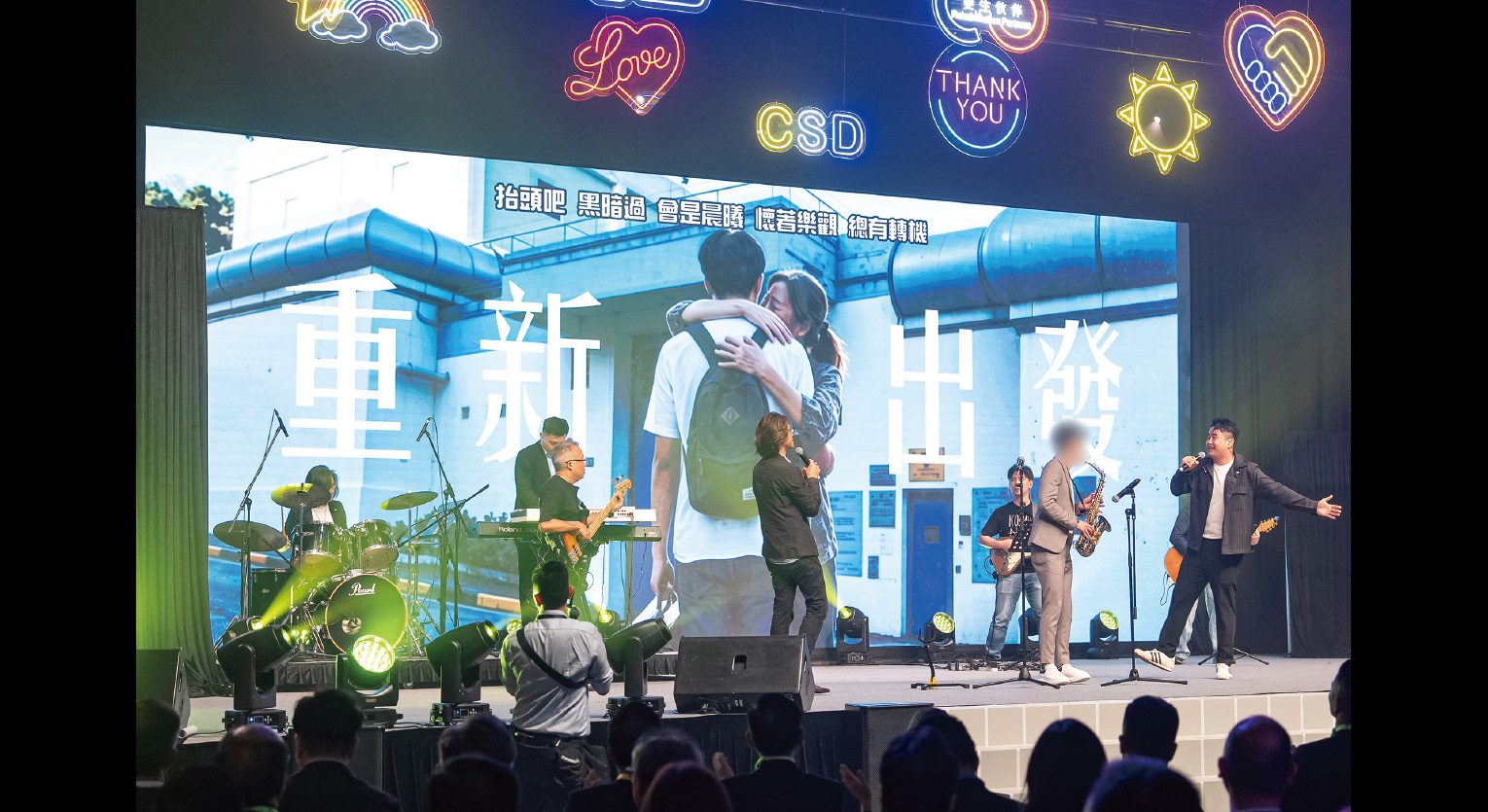
Last year, the CSD invited secondary school teachers and students to attend an anti-drug drama and music performance, "Creative and Rehabilitation" performed by PICs in Stanley Prison. With PICs as the main cast, the drama disseminated to the attending students the harmful effects of taking etomidate and the heavy price of drug trafficking. Last year, the Department further launched a new series of anti-drug videos called "Drugs plague lives - loved ones bear the pain".
Enhancing experiential training to nurture a new generation of young people with an affection for our country and Hong Kong
The Department continued a school-based programme to provide on-campus training for 7 schools. The total number of CSPL trainees has exceeded 700, representing an increase of 16% as compared with 2024. CSPL trainees were arranged to undertake internships in Huizhou, conduct visits to the Hope Towns in Yan'an and Nanjiang and participate in the opening and closing ceremonies of the 15th National Games. These initiatives aim to enhance CSPL trainees' understanding of the nation's developments and achievements in various fields through personal experiences, thereby strengthening their sense of national identity. Last year, a total of more than 39000 youth participants joined various CSPP activities.
Pursuing future development along four major directions of work
This year, we look forward to numerous opportunities despite all the challenges ahead. The Department will uphold an innovative spirit by introducing four major directions of work. We will continue to launch new initiatives in the areas of regional collaboration, custodial management, rehabilitation and community education, with a view to shaping the CSD as an internationally acclaimed correctional service.
Playing the role of an international link and promoting professional exchanges
.To organise the second Greater Bay Area Correctional Services Tactical Skills Competition
.To hold a large-scale seminar this year to celebrate the 50th anniversary of the establishment of the Psychological Services Section of the CSD
Utilising innovation and technology to strengthen management effectiveness
.To install the Automatic Drone Patrol and Monitoring System 2.0 in 6 maximum security institutions
.To construct related AI models, with a view to assisting the Department in enhancing the effectiveness of its enforcement efforts against PICs’ participation in illegal activities
.To install the Smart Visitor Management System on a trial basis (the visitor self-registration kiosk)
Providing innovative rehabilitation services based on the desistance theory
.To collaborate with an non-governmental organisation (NGO) to establish the first rehabilitation youth football team.
.To organise a Bachelor in General Studies programme in the Ethics College
.To address the special characteristics of female PICs, the Department will, in collaboration with an NGO, launch an advanced cooking training and instructor-matching programme at Lo Wu Correctional Institution
.To keep reviewing the application and effectiveness of the desistance theory through evidence-based research by the Correctional Rehabilitation Research Unit
Promoting national education to foster a strong sense of belonging to our country
.To extend the Project PATH to supervisees after discharge
.To be proactive in organising exchange tours to the Mainland for supervisees
.To arrange for young people to visit Belt and Road countries
Conference’s Highlights
At the press conference, the Department arranged for media representatives to tour the cells, hospital facilities, and a new project, 3D Product Design and Innovation Workshop, in Stanley Prison, enabling the public to gain a better understanding of the secure and healthy custodial environment provided for PICs, as well as the Department’s modern and progressive rehabilitation services.
Cells
Additional fans of different types have been installed in Stanley Prison, including large standing industrial fans and anti-suicide cell safety fans. Moreover, the Department continues to proactively optimise the architectural design in collaboration with the Architectural Services Department. For example, new types of grille gates and windows with better ventilation have been installed in Stanley Prison to effectively enhance the natural convection inside buildings. In addition, correctional institutions have been progressively making use of innovative technologies such as solar control films and cooling coatings, to lower the indoor temperature.
Hospital Facilities
Stanley Prison has different hospital facilities and services, including Specialist Consultation Room, TeleHealth Consultation Room and X-ray Room. This demonstrates the Department’s commitment to providing PICs with different medical services, such as ophthalmic service and telemedicine consultation service.
3D Product Design and Innovation Workshop
Stanley Prison has for the first time established the 3D Product Design and Innovation Workshop, which utilises PolyU’s patented “food waste-derived 3D printing material” technology to make environmentally friendly 3D printing materials with spent coffee grounds, thereby promoting a green correctional industry. PICs are responsible for the design, production, and packaging of the products. The Department offers vocational training relating to graphic design, providing PICs with one-stop training.